Comprehensive Coal Quality Analysis: Precision Engineering for Power, Metallurgy, and Mining
Solid mineral fuels—ranging from lignite and sub-bituminous coal to high-rank bituminous coal, anthracite, and metallurgical coke—display profound chemical, thermal, and mechanical variability. Accurate, repeatable coal quality analysis directly dictates boiler thermal performance, carbon emission compliance, furnace refractory longevity, and the structural integrity of blast furnace feedstocks.
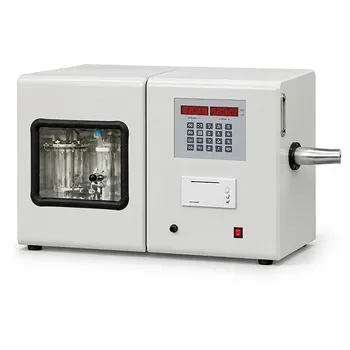
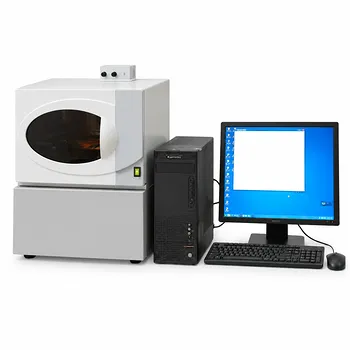
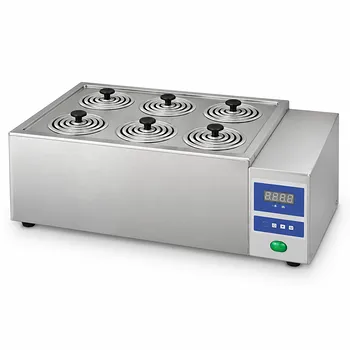
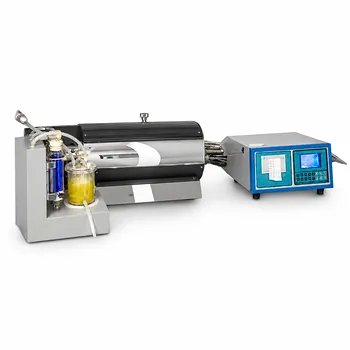
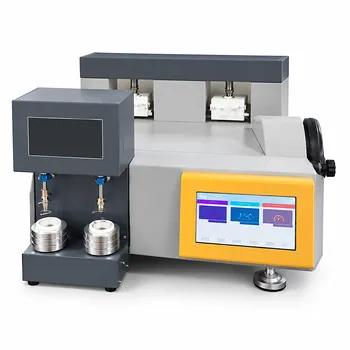
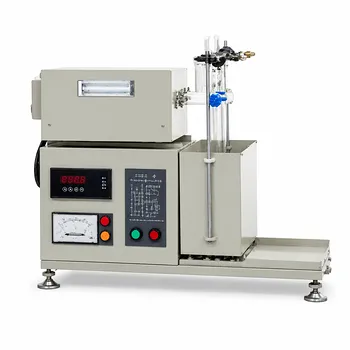
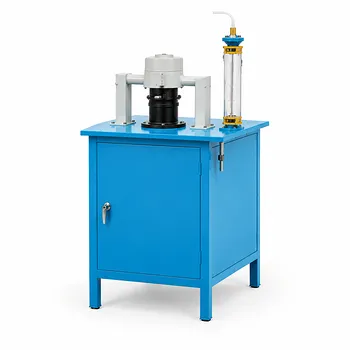
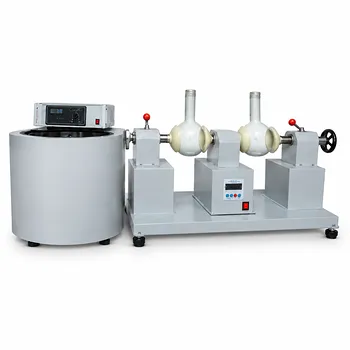
KINTEK’s complete portfolio of coal quality analyzers combines advanced thermodynamic measurement, automated coulometry, thermogravimetry, and calibrated mechanical attrition testing. Engineered to withstand continuous industrial testing cycles, our instruments eliminate operational drift and deliver seamless compliance with international consensus standards including ASTM, ISO, and GB/T.
Analytical Paradigms and Technological Principles
1. Calorific Determination (Bomb Calorimetry)
Calorific value is the primary commercial metric for fuel valuation and thermodynamic efficiency calculations. KINTEK oxygen bomb calorimeters operate on the principle of constant-volume combustion within a pressurized, pure-oxygen environment (typically 2.8 to 3.2 MPa).
- Thermodynamic Precision: Featuring high-sensitivity platinum resistance thermometers (PT1000) providing a resolution of 0.0001 K, the systems continuously track jacket and bucket thermal equilibration.
- Isoperibol and Refrigerated Stabilization: Advanced models integrate closed-loop compressor chilling with dual-mode water circulation. This automatically balances the heat capacity of the inner vessel and eliminates ambient thermal interference, standardizing test run cycles to under 15 minutes without manual water temperature conditioning.
- Automated Fluid Management: Computer-controlled volumetric water dosing and automated oxygen filling eliminate human error in water mass measurement, ensuring standardized heat capacity ($C$-value) calibration across hundreds of sequential cycles.
2. Elemental Analysis: Sulfur, Carbon, and Hydrogen
Sulfur and hydrogen concentrations govern environmental emissions (SOx emissions, flue-gas acid dew point) and net calorific value calculations.
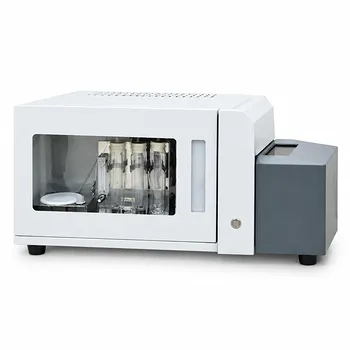
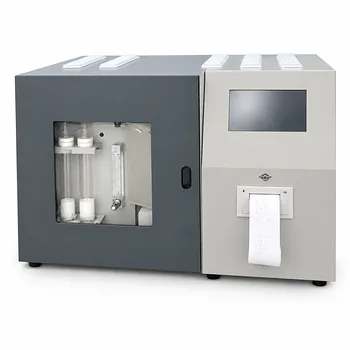
- Coulometric Sulfur Determination: Samples undergo high-temperature oxidative combustion in a silicon carbide furnace operating at 1150°C to 1200°C under an oxygen stream. All sulfur species are quantitatively converted to sulfur dioxide ($SO_2$), which is continuously swept into an electrolytic cell containing potassium iodide and glacial acetic acid. The liberated $SO_2$ is automatically titrated via electrochemically generated iodine according to Faraday's law:
$$\text{SO}_2 + \text{I}_2 + 2\text{H}_2\text{O} \rightarrow \text{H}_2\text{SO}_4 + 2\text{HI}$$
Microcomputer integration measures the total consumed Faradaic electrical charge, providing an absolute, calibration-stable determination of total sulfur content down to 0.001% resolution without requiring consumable standard solutions.
- Rapid Carbon and Hydrogen Determination: Utilizing dual-stage combustion zones (up to 1350°C) with catalytic copper oxide and lead chromate fillings, fuel hydrogen is quantitatively converted to water vapor, which is subsequently measured via continuous coulometric absorption or precision differential gravimetric absorption, generating verified data within 10 to 15 minutes.
3. Proximate Analysis and Ash Behavior
Proximate analysis quantifies the four fundamental commercial components of solid fuel: moisture, volatile matter, fixed carbon, and ash yield.
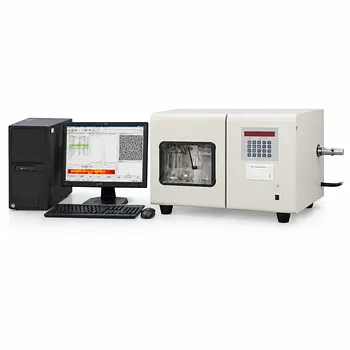
- Thermogravimetric Dual-Furnace Proximate Analyzers: KINTEK dual-furnace systems operate an automated carousel within an atmosphere-controlled environment (alternating between ultra-pure nitrogen and pure oxygen). By combining continuous internal analytical balance tracking with programmed thermal ramping, moisture is driven off at 105°C–110°C, volatile matter is pyrolyzed at 900°C in an inert atmosphere, and residual fixed carbon is combusted to leave pure inorganic ash residue, testing up to 19 samples per run automatically.
- Continuous Rapid Ashing Apparatus: For high-throughput industrial operations, continuous-conveyor ashing apparatus drives samples through zoned temperature gradients (500°C pre-combustion, 815°C final combustion) on adjustable-speed ceramic carriers, preventing rapid deflagration while accelerating ash determination cycles to mere fractions of traditional muffle furnace protocols.
- Automated Ash Fusibility Determination: High-temperature furnace systems utilizing molybdenum disilicide ($MoSi_2$) elements heat ash cones, cylinders, or pyramids up to 1520°C in either oxidizing or reducing ($CO/CO_2$) atmospheres. High-definition CCD optical pyrometry automatically detects the four internationally standardized thermal milestones: Deformation Temperature (DT), Softening Temperature (ST), Hemispherical Temperature (HT), and Fluid Temperature (FT), mitigating boiler fouling and slagging hazards.
4. Mechanical Strength, Attrition, and Grindability
Physical properties dictate fuel transport, pulverizer power consumption, and furnace burden permeability.
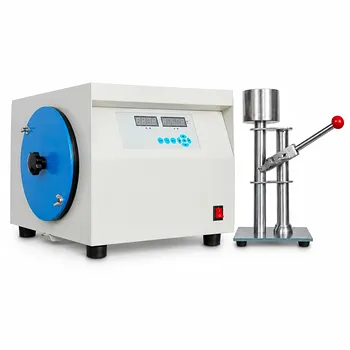
- Hardgrove Grindability Index (HGI): Grindability measures the ease with which coal can be pulverized in industrial ball and roller mills. KINTEK HGI apparatus incorporates precision-machined steel balls rotating within a stationary grinding bowl under a calibrated vertical force of $284 \pm 2\text{ N}$. An automated microcomputer revolution counter halts operation precisely at 60 revolutions. Sieve analysis of the resulting fraction yields the standardized HGI value via calibrated linear regression equations.
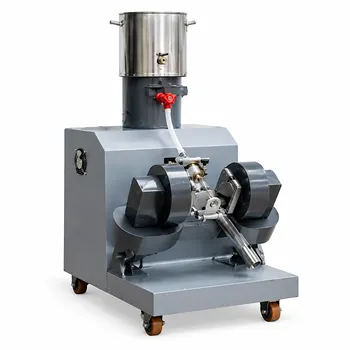
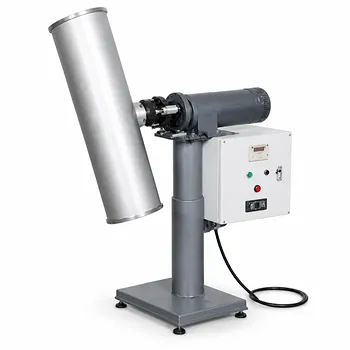
- Drop Shatter and Micum Coke Drum Testers: For metallurgical coke and industrial briquettes, drop shatter systems apply gravitational impact from precise heights (1829 mm / 6 ft) against armor-grade steel impact plates. Sealed Micum drums execute controlled tumble-rotation cycles to calculate critical shatter resistance ($M_{40}$ / $M_{25}$) and abrasion resistance ($M_{10}$) indices, operating within enclosed acoustic dust containment shells to protect laboratory personnel.
- Caking Index (G-Value) and Static Compaction: For coking coal evaluation, integrated static presses apply uniform, calibrated compression to bituminous coal and anthracite blends within specialized crucibles prior to high-speed tumbling drum abrasion analysis, providing critical metrics on coke-strength-after-reaction (CSR) and coking capability.
Analytical Methodologies and Instrument Capabilities
| Parameter |
Applicable Standards |
Analytical Principle / Detection |
Primary Industry Significance |
KINTEK Technical Advantage |
| Gross Calorific Value (GCV) |
ASTM D5865, ISO 1928, GB/T 213 |
Oxygen bomb calorimetry; isoperibol / refrigerated jacket |
Commercial settlement, boiler thermal heat balance |
0.0001 K resolution, dual active chilling, fully automated water dosing |
| Total Sulfur ($S_t$) |
ASTM D4239, ISO 19579, GB/T 214 |
Dual-stage thermal combustion; coulometric micro-titration |
Regulatory emissions monitoring, boiler corrosion control |
Non-depleting electrolytic cell, automatic endpoint detection, 20-sample carousel |
| Proximate Composition |
ASTM D3172, ASTM D7582, ISO 17246 |
Dynamic thermogravimetric analysis (TGA) in $N_2$ / $O_2$ |
Boiler combustion profiling, fuel classification |
Dual-furnace multi-sample capability, certified arbitration accuracy |
| Ash Fusion Temperatures |
ASTM D1857, ISO 540, GB/T 219 |
Optical CCD pyrometry in reducing/oxidizing atmospheres (up to 1520°C) |
Boiler slagging, fouling, and clinkering prevention |
Intelligent four-point geometric recognition algorithm, MoSi2 heating elements |
| Grindability (HGI) |
ASTM D409, ISO 5074, GB/T 2565 |
Ball-race grinding under calibrated static mechanical load |
Milling energy forecasting, pulverizer wear control |
Automatic 60-revolution cutoff, ergonomic mechanical bowl positioning jack |
| Coking/Caking Index |
ISO 15585, GB/T 5447 |
Controlled static load compaction followed by standardized abrasion |
Blast furnace coke strength determination |
Microcomputer-controlled static pressing, integrated acoustic alarms |
| Coke Shatter / Drum Index |
ASTM D3402, ISO 556, ISO 616 |
Gravitational impact / standardized cylindrical drum tumbling |
Coke physical degradation modeling inside blast furnaces |
Heavy structural steel, sealed dust-containment designs, digital cycle presets |
Key Engineering Advantages of KINTEK Coal Testing Systems
- Operator-Independent Automation: By eliminating manual titration endpoints, volumetric water weighing, and physical dial reading, KINTEK systems reduce human error. Microcomputer architectures automatically calculate moisture compensation, regression calibration lines, and atmospheric pressure corrections.
- Exceptional Thermal and Structural Robustness: Ash fusion testers and sulfur combustion furnaces utilize premium molybdenum disilicide ($MoSi_2$) and silicon carbide ($SiC$) heating elements paired with multi-layer high-purity alumina fiber insulation, achieving exceptional thermal ramp rates, superior thermal stability, and low external casing temperatures.
- High-End Digital Integration: Analytical software outputs data natively to Laboratory Information Management Systems (LIMS). USB, Ethernet, and RS-232 communication interfaces support real-time data streaming, dynamic calibration curves, diagnostic error logging, and direct generation of standard-compliant customer test certificates.
- Laboratory Safety Architecture: High-temperature zones feature thermal cutoff interlocks, bomb calorimeters include automated over-pressure relief mechanisms, and mechanical drum testers incorporate fully enclosed cabinets with integrated dust ports to maintain air quality and operator safety.
Industrial Applications
1. Coal-Fired Power Generation
Thermal power plants require continuous, fast proximate and calorific testing of raw incoming coal to calculate heat rates, optimize fuel-to-air combustion ratios, and avoid pulverizer overload. Real-time ash fusibility analysis prevents costly downtime caused by catastrophic slagging on boiler superheater tubes.
2. Coking Plants and Metallurgical Steelmaking
Blast furnace operations require metallurgical coke with exceptional physical strength and low sulfur content. KINTEK Micum coke drums, drop shatter testers, and automated caking index systems allow coking plants to systematically test blended coking coal charges, preserving permeability and gas flow in industrial blast furnaces.
3. Commercial Coal Inspection and Preparation Facilities
Commercial testing organizations process hundreds of heterogeneous samples daily. Our high-throughput multi-sample carousels for sulfur determination, dual-furnace TGA proximate analyzers, and automatic HGI testers maximize analytical velocity while maintaining legal and commercial arbitration-grade accuracy.
4. Activated Carbon and Adsorbent Manufacturing
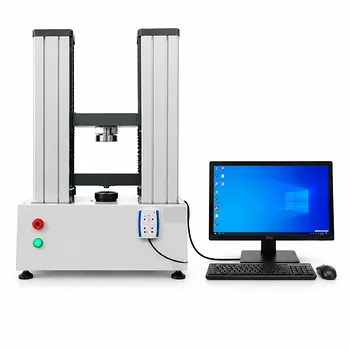
Producers of coal-based activated carbons rely on KINTEK vertical mechanical strength testers and ball abrasion resistance systems (GB/T 13803.5 and GB/T 30202.3) to qualify granular adsorbents for municipal water filtration, industrial gas desulfurization, and solvent recovery applications.
5. Cement Manufacturing and Minerals Processing
Our elemental analyzers and rapid free-calcium-oxide testing systems enable cement clinker plants to balance kiln thermal energy, control secondary raw material fuel blends, and prevent structural unsoundness caused by unreacted CaO in final clinker products.
Complete Turnkey Laboratory Solutions
Beyond specialized analytical equipment, KINTEK provides complete analytical testing chains. Characterization accuracy relies directly on representative sample preparation. As a global laboratory equipment manufacturer, KINTEK provides an end-to-end testing workflow:
- Primary and Secondary Size Reduction: Heavy-duty jaw crushers and hammer mills reduce raw lump coal to standard sub-sample particle sizes.
- Milling and Pulverization: Sealed micro-mill vibratory disk pulverizers reduce analytical samples to $<0.2\text{ mm}$ (200 mesh) without loss of moisture or volatile fractions.
- Homogenization and Sieving: High-precision electromagnetic test sieve shakers and mechanical splitters guarantee representative sample splits.
- Consumables and Thermal Accessories: KINTEK manufactures ultra-pure benzoic acid calibration standards, ceramic and quartz combustion boats, oxidation reagents, high-purity platinum crucibles, and customized graphite tools.
Every laboratory setup can be customized to match your facility's power specifications (110V/220V/380V), footprint constraints, sample throughput demands, and target compliance frameworks.
Optimize Your Solid Fuel Laboratory with KINTEK
Whether you are modernizing a thermal power station testing facility, establishing an ISO/IEC 17025 accredited third-party inspection laboratory, or upgrading metallurgical coke quality control systems, KINTEK engineers deliver the analytical reliability, high durability, and certified accuracy your operations require.
Discuss your project with our application specialists today to request technical specifications, schedule an instrument demonstration, or receive a tailored quotation.
Contact Our Analytical Specialists